👤 Rockshell Insights
10/11/2025
In modern chemical industries, energy consumption is both an operational necessity and a financial burden. Traditional boilers, steam systems, and fossil-fuel heating methods have long dominated the sector, but rising fuel costs and sustainability pressures have forced industries to rethink their approach.
This is where high-temperature heat pumps step in. Unlike conventional systems, they don’t just provide heat, they recycle, recover, and optimize it. For chemical manufacturers working with challenging media like alkaline, acidic, or high-temperature fluids, advanced heat pumps are proving to be game-changing.
In this blog, we’ll explore how high-temperature heat pumps enhance energy efficiency, reduce costs, and support sustainable growth in the chemical industry.
What Are High-Temperature Heat Pumps?
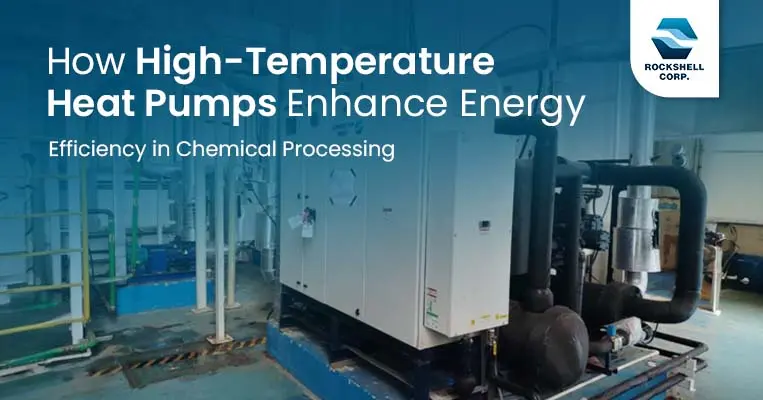
A heat pump is a device that transfers heat from one source to another using a refrigeration cycle. While domestic heat pumps typically operate at lower temperature ranges, industrial high-temperature heat pumps are designed to handle temperatures above 100°C, sometimes even up to 160°C depending on the application.
These systems:
- Extract waste heat from exhausts, wastewater, or ambient sources.
- Upgrade this low-grade heat to higher temperature levels.
- Supply it back into industrial processes where consistent heating is needed.
For chemical processing, where heating is continuous and energy-intensive, this technology provides not just efficiency but also resilience.
The Energy Challenge in Chemical Processing
The chemical industry is one of the largest consumers of industrial energy worldwide. Whether it’s distillation, concentration, evaporation, drying, or chemical reactions, almost every process involves thermal energy.
Key Pain Points:
- High operational costs: Boilers and furnaces run on costly fossil fuels.
- Heat loss: Large volumes of waste heat remain unutilized.
- Environmental impact: Conventional heating leads to significant CO₂ emissions.
- Maintenance: Traditional systems require constant upkeep, adding downtime.
Given these challenges, manufacturers are actively seeking energy-efficient heating solutions that balance performance with sustainability.
How High-Temperature Heat Pumps Drive Energy Efficiency
Waste Heat Recovery
In chemical plants, a huge amount of energy is wasted in the form of hot gases, wastewater, or exhaust streams. High-temperature heat pumps can capture this wasted energy and reintroduce it into the system, reducing dependency on external energy sources.
Example: In an evaporation process, the latent heat of vaporized liquid can be recovered and reused instead of venting it out.
Higher Coefficient of Performance (COP)
One of the strongest advantages of heat pumps is their COP (Coefficient of Performance).
- A conventional boiler has an efficiency close to 80-90%.
- A high-temperature heat pump can achieve COPs of 3-6, meaning it delivers 3-6 units of heat for every unit of electricity consumed.
This translates directly into reduced energy bills and lower carbon footprints.
Precision Heating for Challenging Media
Chemical processes often involve corrosive or aggressive fluids such as acidic solutions, alkaline chemicals, or high-temperature slurries. Specialized industrial heat pumps are built with corrosion-resistant materials, advanced filtration, and customized design to handle these conditions without compromising on energy performance.
Lower Carbon Emissions
Switching from fossil-fuel-based systems to electrically powered heat pumps can reduce emissions dramatically, especially in regions where renewable energy sources (solar, wind, hydropower) are available.
This is not just about compliance it’s about future-proofing operations as industries transition towards carbon neutrality.
Process Reliability and Consistency
Unlike boilers that require frequent shutdowns for maintenance, heat pumps operate with higher reliability. Their ability to maintain consistent temperature levels improves process stability, a critical factor in chemical manufacturing where minor fluctuations can affect product quality.
Key Applications of High-Temperature Heat Pumps in the Chemical Industry
- Evaporation & Distillation: Reusing vapor heat to cut energy demand.
- Drying Processes: Providing steady, high-grade heat for drying chemical powders or granules.
- Concentration of Chemicals: Efficiently heating alkaline or acidic solutions.
- Hot Water & Steam Generation: Supplementing or replacing conventional boilers.
- Zero Liquid Discharge (ZLD) Systems: Supporting sustainable wastewater treatment.
Case Study
A mid-sized chemical processing plant switched from natural gas boilers to high-temperature heat pumps for its evaporation process. Within the first year, the plant:
- Reduced energy consumption by 45%.
- Cut annual CO₂ emissions by 2,000 tonnes.
- Saved significantly on operational costs, with an ROI achieved in less than 3 years.
This demonstrates how practical and scalable the technology can be.
Sustainability and Compliance Advantages
Governments worldwide are tightening environmental regulations. The Paris Agreement, India’s commitment to renewable energy, and stricter ESG (Environmental, Social, Governance) frameworks mean that industries must adapt.
High-temperature heat pumps allow chemical manufacturers to:
- Meet compliance with energy efficiency norms.
- Attract investors who prioritise sustainability.
- Build a green brand image, critical in today’s competitive markets.
The Role of Rockshell Corp in Heat Pump Innovation
At Rockshell Corp, we specialise in industrial heat pump solutions designed for challenging and energy-intensive environments. Our systems are:
- Engineered with high COP for maximum efficiency.
- Built with materials suitable for aggressive fluids like alkaline and acidic chemicals.
- Custom-designed for applications such as vacuum evaporators, ZLD plants, and high-temperature chillers.
- Manufactured locally in India, with a focus on global quality standards.
Our mission is to empower industries to embrace sustainable, energy-efficient solutions without compromising on performance.
Future Outlook: Heat Pumps in the Industrial Energy Transition
Looking ahead, the role of heat pumps will only expand. With electricity grids shifting towards renewables, high-temperature heat pumps will serve as the bridge between energy efficiency and sustainability in the industrial world.
For chemical industries, the question is no longer Can heat pumps work for us? but How quickly can we integrate them to stay competitive?
Conclusion
High-temperature heat pumps are more than just an alternative to conventional boilers they represent a paradigm shift in industrial heating. By recovering waste heat, delivering superior efficiency, and ensuring consistent heating for complex chemical processes, they not only reduce costs but also accelerate the journey towards sustainability.
For chemical manufacturers in India and beyond, adopting high-temperature heat pumps is no longer an option it’s a necessity for energy efficiency, regulatory compliance, and long-term profitability.