👤 Rockshell Insights
20/04/2026
The global manufacturing landscape is undergoing a critical transformation regarding how thermal energy is generated and managed. For over a century, industrial facilities have relied heavily on the combustion of fossil fuels to meet their process heating requirements. Traditional industrial boilers burning coal, natural gas, or diesel have been the primary equipment used to generate the steam necessary for countless manufacturing processes.
However, the continued reliance on these combustion-based systems presents profound economic and environmental challenges for modern manufacturers. Combusting fossil fuels exposes facilities to highly volatile global energy markets, leading to unpredictable operational expenditures. Furthermore, the massive quantities of greenhouse gas emissions generated by these boilers make it increasingly difficult for companies to meet strict environmental regulations and corporate sustainability targets.
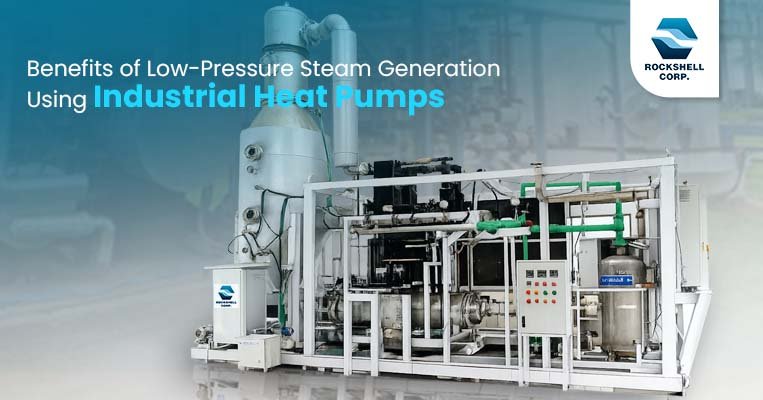
In response to these compounding challenges, industrial leaders and process engineers are actively seeking advanced, electrified alternatives. The deployment of industrial heat pumps has emerged as the definitive technological solution for the future of manufacturing. By capturing existing low-grade heat and upgrading it to usable process temperatures, these electrified systems allow facilities to drastically reduce boiler fuel consumption.
This technological shift represents a fundamental change in industrial thermodynamics. Instead of creating new heat through carbon-heavy combustion, manufacturing plants can now establish highly advanced, energy saving steam systems. These electrified networks align perfectly with global net-zero mandates while providing unmatched thermal stability for critical production lines.
Understanding Low-Pressure Steam in Manufacturing
To appreciate the impact of heat pump technology, one must first understand the critical role of low-pressure steam within industrial environments. Low-pressure steam is generally defined as steam generated at pressures up to 3.5 bar, which corresponds to saturation temperatures ranging from 150°C to 160°C.
While high-pressure, superheated steam is required for heavy applications like power generation or driving large mechanical turbines, the vast majority of light and medium manufacturing processes do not require such extreme conditions. Instead, these processes rely on modest, highly controlled thermal inputs. Low-pressure steam is uniquely suited for these applications because it provides precise temperature control and gentle heat transfer.
Because it operates at lower temperatures and pressures, low-pressure steam significantly reduces the risk of thermal degradation in heat-sensitive products. This makes it the industry standard for processing delicate organic compounds, such as foods, pharmaceuticals, and specialized textiles. Furthermore, utilizing lower pressures translates to reduced mechanical stress on facility piping networks, valves, and heat exchangers.
The utilization of this thermal medium is widespread across multiple critical sectors. It is the primary energy carrier for indirect heating in jacketed vessels, sterilization autoclaves, pasteurization units, and commercial humidification systems. Despite its lower energy intensity compared to high-pressure steam, generating it via traditional boilers remains a highly inefficient process, making it a prime candidate for technological modernization.
The Mechanics of Electrified Steam Generation
Industrial steam heat pumps represent the pinnacle of modern thermodynamic engineering and thermal recovery. These systems operate on a closed-loop refrigeration cycle, capturing low-grade thermal energy from a source that is typically considered a waste by product. The process effectively upgrades this waste heat into high-value process steam.
The generation cycle begins with the extraction of latent or sensible heat from utility streams. Common sources include wastewater effluent, cooling tower return water, industrial exhaust air, or hot condensate. Once this low-grade heat is absorbed into the system’s evaporator, the thermal energy is transferred to a specialized working fluid or low-GWP refrigerant.
The core of the operation relies on mechanical vapor recompression (MVR) technology. Highly specialized compressors are utilized to increase the pressure and temperature of the vaporized working fluid. As the compressor mechanically forces the vapor molecules closer together, the temperature of the fluid rises exponentially, preparing it for the final heat transfer stage.
This superheated vapor is then directed into a robust condenser unit. Here, the condenser transfers the upgraded thermal energy directly to incoming feed water, flashing it into clean, low-pressure steam. The condensed working fluid then passes through an expansion valve, lowering its pressure and temperature before returning to the evaporator, ensuring that virtually no thermal energy escapes the closed-loop system.
Advanced Compressor Technologies
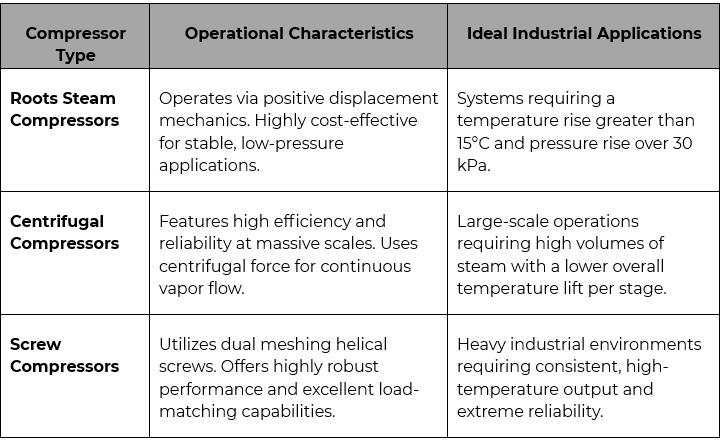
The efficiency and total thermal output of a steam heat pump are heavily dependent on the specific type of compressor utilized within the system. Industrial systems employ advanced compression technologies designed to handle precise volume and pressure requirements.
These advanced compressors allow the heat pump system to achieve a specific temperature lift, commonly referred to as Delta T. In a single compression stage, an industrial steam heat pump can typically achieve a temperature lift of approximately 20°C.
For example, low-pressure waste steam recovered at 120°C can be efficiently upgraded to a highly usable 140°C in just one stage. For processes requiring even higher temperatures, multiple compression stages can be cascaded together. This modular approach allows the system to reach the desired thermal output without sacrificing overall steam system efficiency.
The Thermodynamics of Efficiency (COP)
To truly grasp the operational benefits of low-pressure steam generation using industrial heat pumps, process engineers must analyse the Coefficient of Performance. The COP is the fundamental thermodynamic metric used to evaluate the true efficiency of any heat pump system.
The COP is calculated by dividing the total thermal energy delivered to the industrial process by the electrical energy consumed by the compressor. Traditional fossil-fuel boilers operate at efficiencies that are inherently limited by the physics of combustion and stack losses. Even a perfectly tuned, state-of-the-art natural gas boiler can only achieve a maximum thermal efficiency of roughly 85% to 92%.
This limitation means that for every unit of primary fuel energy consumed, less than one unit of useful heat is produced. In stark contrast, industrial heat pumps routinely operate with a COP ranging from 2.0 to 4.0. A COP of 3.0 indicates that for every single kilowatt-hour (kWh) of electricity consumed by the compressor, the heat pump delivers three kilowatt-hours of usable thermal energy.
This massive thermodynamic advantage is possible because the system is not creating heat from scratch. Instead, it utilizes a small amount of electrical energy to transport and upgrade massive amounts of free, ambient, or waste heat. Certain highly optimized multi-source systems can even achieve a combined COP of up to 7.0 when providing simultaneous heating and cooling to a facility.
Key Benefits of Electrified Steam Generation
The transition to electrified steam generation cascades into a multitude of operational, financial, and environmental advantages. By integrating energy saving steam systems, industrial facilities can fundamentally restructure their overhead costs and environmental compliance strategies.
Significant Energy Cost Savings
The most immediate and tangible benefit of installing an industrial heat pump is the ability to drastically reduce boiler fuel consumption. Volatile pricing in natural gas, diesel, and coal markets constantly threatens the profit margins of global manufacturing facilities.
By shifting the thermal load from combustion equipment to electrically driven heat pumps, facilities insulate themselves against unpredictable fossil fuel price spikes. Because heat pumps leverage free waste heat, the total input energy required to generate steam drops precipitously. Facilities routinely experience an overall energy consumption reduction of 25% to 60% compared to baseline boiler operations.
When paired with onsite renewable energy generation or favourable industrial electricity tariffs, the operational cost of steam generation plummets even further. This strategic electrification virtually eliminates the primary fuel expenses associated with traditional boilers, transforming a major facility expense into a highly optimized, predictable operational cost.
Unprecedented Steam System Efficiency
Optimizing thermal efficiency is a constant battle for facility managers and mechanical engineers. Traditional steam networks suffer from inherent systemic losses that degrade overall plant performance. Transporting steam across sprawling factory floors leads to inevitable thermal radiation losses along the piping network.
Furthermore, the steam generation process itself requires constant purging of impurities via automatic boiler blowdown. This necessary maintenance procedure wastes massive volumes of boiling water and treatment chemicals. Heat pumps offer a localized, decentralized approach to steam generation that solves these inherent inefficiencies.
Modular heat pump units can be strategically placed directly adjacent to the specific process that requires low-pressure steam. This physical proximity eliminates the need for extensive, poorly insulated piping networks, thereby retaining maximum thermal energy. By operating as a closed-loop system, the heat pump effectively recycles energy that would otherwise be permanently lost to the atmosphere.
Decarbonization and Scope 1 Emissions Elimination
The global industrial sector is under immense regulatory pressure to meet stringent climate agreements and carbon reduction targets. Scope 1 emissions, which are the emissions resulting from direct, on-site fuel combustion, are a primary target for corporate sustainability initiatives.
Low-pressure steam heat pumps provide a direct, immediately actionable pathway to eliminating these on-site emissions. When powered by a decarbonized electrical grid or dedicated renewable energy sources, electrified steam generation produces absolutely zero on-site greenhouse gases.
This complete elimination of combustion not only fulfils internal corporate ESG mandates but also safeguards the facility against future carbon taxation. Studies indicate that electrifying industrial heat supply could save hundreds of millions of tons of CO2 annually, making it one of the most critical technologies for mitigating global climate change.
Mastery of Waste Heat Recovery
Industrial operations are inherently wasteful regarding the management of thermal energy. Processes such as commercial refrigeration, air compression, effluent treatment, and hot air drying routinely vent massive amounts of low-grade heat directly into the atmosphere.
This rejected heat typically ranges from 20°C to 100°C, a temperature band that is generally too low to be useful for direct process heating. Industrial heat pumps act as a highly efficient thermal bridge to reclaim this lost energy. They effectively mine this low-grade waste heat, capturing it from cooling towers, wastewater streams, or exhaust air systems.
Once captured, the heat pump upgrades this free thermal energy to the 150°C to 160°C range required for low-pressure steam applications. This dual-action capability providing vital cooling to one manufacturing process while simultaneously delivering critical heating to another, maximizes the utility of every joule of energy entering the plant.
Enhanced Safety and Simplified Maintenance
Traditional industrial boilers pose significant safety risks to plant personnel and infrastructure. These risks are due to the necessary presence of open flames, highly combustible fossil fuels, and extreme operational pressures. Boiler explosions, while rare, represent catastrophic facility risks.
Managing these risks requires rigorous, constant safety monitoring, specialized certified boiler operators, and extremely expensive facility insurance premiums. Electrified heat pumps bypass these hazards entirely by completely eliminating combustion from the thermal equation.
There are no explosive fuels stored on-site, no open flames to monitor, and absolutely no toxic flue gases such as carbon monoxide, nitrogen oxides (NOx), or sulphur oxides (SOx) to scrub from exhaust stacks. Consequently, the routine maintenance regime for a heat pump is substantially less burdensome than that of a fired boiler, translating to significantly reduced operational downtime.
Technical Specifications: The Rockshell Standard
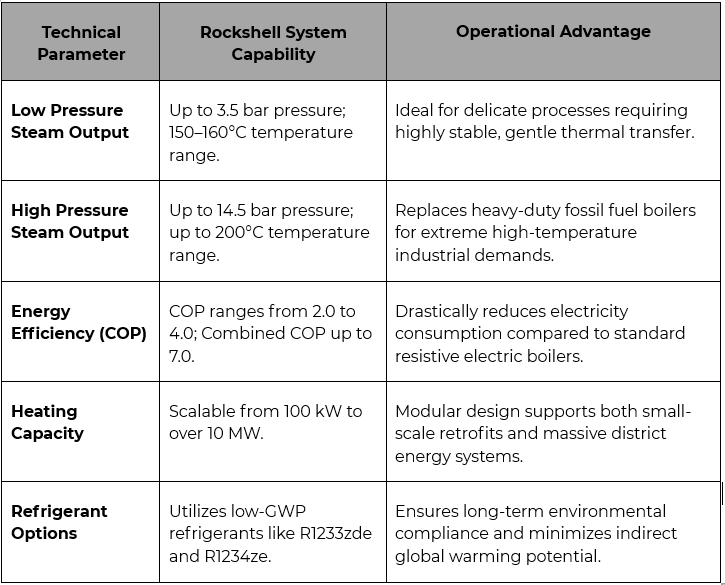
When evaluating industrial heat pumps for process integration, engineers must scrutinize the technical capabilities of the equipment. Rockshell Corp manufactures highly specialized, custom-engineered systems designed to maximize steam system efficiency across diverse industrial sectors.
Rockshell’s systems are uniquely constructed to survive harsh, corrosive industrial environments. Utilizing premium materials such as titanium heat exchangers, duplex alloys, and SS316L stainless steel, these chemical-grade heat pumps can interface directly with highly alkaline or acidic waste streams.
Industry-Specific Applications and Use Cases
The versatility of low-pressure steam makes it an indispensable utility across a wide variety of manufacturing sectors. Different industries present unique thermal profiles, and the integration of energy saving steam systems must be meticulously tailored to meet these specific demands.
Food and Beverage Processing
In the food and beverage sector, strict hygiene, precise temperature control, and consistent thermal delivery are non-negotiable requirements. These parameters are essential for maintaining product safety, texture, and nutritional quality.
Low-pressure steam is the industry standard precisely because it eliminates the risk of scorching or unevenly heating delicate organic compounds. Dairy plants and commercial beverage bottlers rely heavily on low-pressure steam to rapidly heat products to exact temperatures for pasteurization.
Heat pumps can capture the massive amounts of waste heat generated from the rapid cooling cycle of pasteurization. The system instantly upgrades this recovered energy to provide the high-quality steam required for the active heating cycle, creating a highly efficient, closed-loop thermal process.
Pharmaceutical and Biotech Manufacturing
The pharmaceutical industry operates under the most stringent regulatory frameworks globally. Flawless execution of thermal processes is required to ensure drug efficacy, safety, and continuous regulatory compliance.
Low-pressure, high-purity steam is utilized extensively to sterilize laboratory equipment, pharmaceutical bioreactors, and cleanroom environments. Heat pumps ensure a highly stable and controllable steam supply, completely free from the dangerous pressure fluctuations common in older combustion boilers.
Furthermore, active pharmaceutical ingredients (APIs) often require complex distillation and concentration processes. Chemical-grade heat pumps are specifically engineered to handle these aggressive solvents and high-temperature evaporation processes, ensuring Zero Liquid Discharge (ZLD) while drastically reducing boiler fuel consumption.
Textile and Paper Mills
The commercial textile and paper industries are notoriously energy-intensive, consuming massive quantities of water and thermal energy to process raw materials into finished consumer goods.
In textile plants, low-pressure steam is absolutely vital for setting dyes, chemical fabric finishing, and garment pressing. These facilities simultaneously dump massive volumes of hot, dyed wastewater into their effluent treatment plants. Heat pumps can recover the thermal energy from this wastewater before it is discharged, recycling the heat back into the steam generation network.
Similarly, paper mills utilize massive steam-heated rollers to dry pressed pulp into continuous paper sheets. Industrial heat pumps integrate seamlessly into the paper drying cycle by capturing the hot, humid exhaust air rising from the drying rollers, condensing the moisture, and returning the latent heat directly to the plant’s steam system.
Chemical and Petrochemical Processing
Chemical processing requires highly robust thermal equipment capable of surviving highly corrosive environments while delivering precise thermal control to initiate and safely maintain complex chemical reactions.
Low-pressure steam is utilized to gently and uniformly heat chemical reactor jackets. This precise application of heat prevents localized hotspots that could ruin an expensive chemical batch or trigger an unsafe exothermic reaction.
Because chemical-grade heat pumps are uniquely constructed using titanium heat exchangers and special anti-corrosion coatings, they can interface directly with highly alkaline or acidic waste streams. This allows chemical plants to recover heat safely without their equipment succumbing to rapid, catastrophic corrosion.
Financial Modelling and Return on Investment (ROI)
The primary barrier to adopting advanced energy saving steam systems is often the initial capital expenditure (CAPEX). Industrial heat pumps require a higher upfront capital investment compared to purchasing a standard, off-the-shelf natural gas boiler.
However, a comprehensive analysis of the total cost of ownership (TCO) rapidly justifies the initial investment. The financial viability of a heat pump project hinges heavily on the “spark gap” the ratio between the localized cost of industrial electricity and the cost of fossil fuels.
In regions where electricity is relatively inexpensive, or where fossil fuels are heavily taxed due to carbon pricing, the ROI becomes incredibly attractive. Because an industrial heat pump with a COP of 3.0 uses one-third of the equivalent energy of an electric resistance boiler, the operational expenditure savings are profound.
Industrial case studies consistently demonstrate pure energy cost savings ranging from 40% to 70% following a successful heat pump integration. Consequently, despite the higher CAPEX, the simple payback period for an industrial heat pump installation typically ranges between a highly favourable 18 to 36 months.
Why Rockshell Corp is the Premier Global Partner
When facility managers and process engineers evaluate vendors for critical thermal infrastructure, the engineering pedigree, manufacturing capabilities, and proven reliability of the supplier are paramount. Rockshell Corp stands as a definitive global leader in the design, manufacture, and deployment of advanced industrial heat pump solutions.
With its corporate registered office located in Mumbai and a state-of-the-art manufacturing facility in Rabale, Navi Mumbai, India, Rockshell Corp has established a massive, highly reliable global footprint. The company successfully exports sophisticated thermal systems to over 60 countries across Europe, the Middle East, the United States, and Australia.
Rockshell Corp’s engineering teams do not merely assemble standard HVAC components. They design purpose-built, chemical-grade machinery engineered specifically to survive the harshest industrial conditions. With over a century of combined engineering experience, the team has successfully executed more than 1,000 global projects.
The company maintains rigorous quality control standards, backed by ISO9001 and ISO14001 certifications, as well as SGS-certified factory operations. Rockshell offers end-to-end lifecycle support, including initial feasibility studies, precise thermodynamic modelling, turnkey installation, and long-term maintenance.
Conclusion
The era of unchecked industrial fossil fuel consumption is rapidly drawing to a close. To remain competitive, environmentally compliant, and highly profitable in the modern manufacturing landscape, industrial facilities must urgently address the immense inefficiencies inherent in their legacy thermal operations.
Low-pressure steam generation using industrial heat pumps represents a technological breakthrough that solves multiple complex industrial challenges simultaneously. By masterfully capturing and upgrading wasted thermal energy, these advanced systems allow manufacturers to drastically reduce boiler fuel consumption.
The resulting energy saving steam systems operate with an efficiency that defies the physical limitations of traditional combustion. Achieving COP ratings of 2.0 to 4.0 fundamentally restructures a facility’s operational expenditure. Beyond the immediate financial returns, the deployment of this technology enables deep industrial decarbonization by completely eliminating on-site Scope 1 emissions.
Next Steps for Process Engineers and Facility Owners
Transforming your facility’s thermal infrastructure requires expert guidance and precision engineering. Facility managers, process engineers, and corporate sustainability officers are highly encouraged to explore the advanced technological solutions provided by Rockshell Corp.
To accurately determine the feasibility and potential ROI of integrating a custom heat pump into your existing steam network, specific operational data must be analysed. When evaluating your facility for an upgrade, consider the following critical parameters:
What is your primary source of waste heat (e.g., wastewater, cooling water return, hot exhaust air)? What is the specific desired steam temperature and pressure required for your manufacturing process? What is your current steam production method, and what is the localized cost of that fuel?
Engineers and plant owners can explore our Stem Heat pump, download detailed technical catalogues, and consult with thermal engineering experts. By partnering with Rockshell Corp, your facility can rapidly transition to a highly profitable, zero-emission industrial future.