👤 Rockshell Insights
10/04/2026
The global manufacturing sector stands at a critical juncture where traditional thermal energy paradigms are being fundamentally redefined by the twin pressures of energy price volatility and stringent decarbonization mandates. For decades, the industrial steam system has relied almost exclusively on fossil fuel combustion, a process that is inherently limited by the thermodynamic efficiency of the boiler and the carbon intensity of the fuel source. However, the emergence of advanced industrial heat pump technology, spearheaded by innovators like Rockshell, has introduced a transformative mechanism for steam generation. By utilizing high-temperature heat pumps to upgrade low-grade waste heat into process-grade steam, manufacturers can achieve unprecedented levels of energy efficiency while significantly reducing or even eliminating their reliance on traditional boiler fuels.
The primary challenge in modern manufacturing is not merely the generation of heat, but the intelligent management of thermal energy across a facility. Most industrial processes reject a significant amount of low-temperature thermal energy into the atmosphere or water systems, energy that is traditionally considered waste because its temperature is too low for direct reuse. Steam heat pumps bridge this gap by employing a mechanical compression cycle to elevate the temperature of this waste heat to levels required for industrial processes, reaching up to 200⁰C in specialized Rockshell configurations. This shift from heat generation via combustion to heat upgrading via electrification represents the most significant opportunity for fuel savings in the 21st-century manufacturing plant.
Thermodynamic Framework of Industrial Steam Heat Pumps
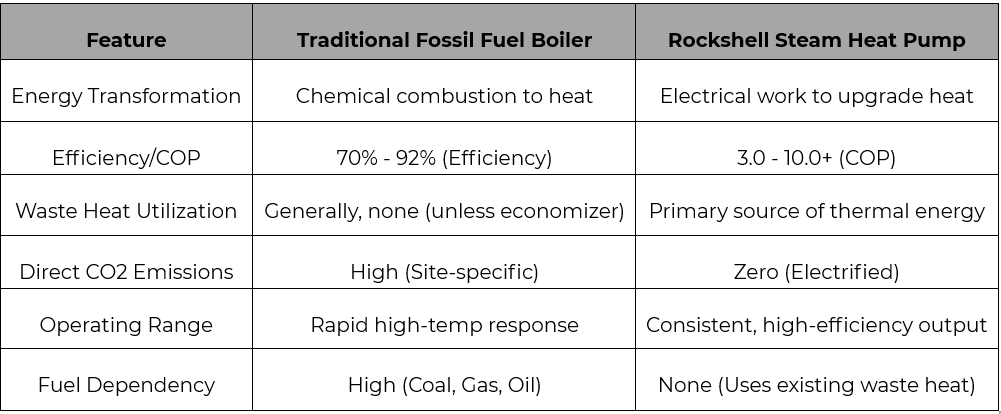
To understand how steam heat pumps reduce boiler fuel consumption, it is necessary to examine the underlying thermodynamics of the vapor compression cycle. Unlike a boiler, which converts the chemical energy of a fuel into thermal energy with an efficiency typically ranging from 70% to 90%, a heat pump moves thermal energy from a source to a sink. The efficiency of this process is defined by the Coefficient of Performance. For a heating application, the COP is the ratio of the total heat delivered to the work input required for compression.
In industrial settings, Rockshell’s steam-producing heat pumps can achieve a COP of 10 or higher in specific configurations where the temperature lift is optimized. This translates to a system that delivers ten units of thermal energy for every one unit of electricity consumed. When compared to a fossil fuel boiler that requires a continuous stream of fuel for every unit of heat produced, the fuel reduction potential becomes clear. By displacing the boiler load with a high-COP heat pump, a manufacturing plant can effectively decouple its production from the fluctuations of the global fuel market.
The temperature-entropy relationship is central to the design of these systems. As the compressor increases the pressure of the working fluid (refrigerant or water vapor), the temperature rises proportionally, moving the fluid into a state where it can transfer heat to a process stream at a higher temperature than the original waste heat source. Rockshell utilizes advanced screw compressors and specialized refrigerants, such as R1233zde, which are optimized for high-temperature envelopes, allowing for the generation of steam at pressures up to 14 bar. This technical capability ensures that the heat pump is not just a peripheral utility but a central component of the industrial thermal architecture.
Primary Mechanisms for Reducing Boiler Fuel Consumption
The reduction of fuel consumption through heat pump integration is achieved through several distinct but interconnected mechanisms. These strategies focus on capturing energy that would otherwise be lost and reintroducing it into the steam cycle at strategic points. By reducing the net energy demand on the primary boiler house, the plant can significantly lower its overall fuel intake and carbon footprint.
Comprehensive Waste Heat Recovery
Industrial plants are prolific generators of waste heat. This energy is found in various forms, such as wastewater from cleaning processes, cooling water from air compressors, and exhaust air from drying units. Traditionally, this heat is too low-grade to be used directly in steam systems. A Rockshell steam heat pump act as a thermal amplifier, capturing this low-grade heat and concentrating it to produce high-pressure steam. This directly displaces the need for the boiler to fire more fuel to meet the steam demand.
Rockshell systems are engineered to tap into a wide array of waste heat sources, including ammonia chiller desuperheaters, cooling tower loops, and heat from diesel generator (DG) sets. By integrating the heat pump into these existing waste streams, the manufacturing plant essentially creates a circular thermal economy. The energy that was previously paid for and then discarded is recovered and returned to the production line, providing a double benefit: reducing the fuel bill for the boiler and lowering the electrical or water costs associated with heat rejection at the cooling tower.
Boiler Feedwater Preheating
One of the most effective ways to improve steam system efficiency is to increase the temperature of the boiler feedwater. For every 6⁰C increase in feedwater temperature, a boiler typically sees a 1% reduction in fuel consumption. While traditional economizers can recover some heat from flue gases, they are often limited by the temperature of the exhaust and the risk of condensation. A heat pump can provide a consistent and much higher temperature lift, preheating feedwater to temperatures far exceeding what is possible with passive heat exchangers alone.
By using a Rockshell high-temperature heat pump to elevate the feedwater temperature, the thermal energy required to convert that water into steam within the boiler is drastically reduced. This “head start” means the boiler does not have to work as hard to reach the saturation point. Furthermore, consistent feedwater temperatures reduce the thermal stress on the boiler’s pressure parts, leading to more stable operation and reduced maintenance costs over the system’s lifecycle.
Mechanical Vapor Recompression for Steam Reuse
Mechanical Vapor Recompression (MVR) is a specific application of heat pump technology that is particularly transformative for industries requiring distillation or evaporation. In a standard evaporation process, the vapor produced is typically condensed, and its latent heat is lost to a cooling medium. MVR technology, as implemented by Rockshell, uses a compressor to increase the pressure and temperature of this waste vapor so it can be reused as the heating medium for the very same process.
This technology can reduce the energy consumption of evaporation and distillation units by up to 70%. By effectively recycling the latent heat of vaporization, the need for “fresh” steam from the boiler house is almost entirely eliminated for these processes. Rockshell’s MVR units are capable of achieving high water recovery rates often exceeding 90% making them essential for Zero Liquid Discharge (ZLD) plants where both energy and water conservation are critical.
Rockshell’s Technical Portfolio and Engineering Excellence
Rockshell Corp has positioned itself as a global leader in high-temperature thermal electrification by developing a portfolio of products that address the specific, high-demand needs of the manufacturing industry. The company’s focus on “Built for Industry. Trusted For Execution.” is reflected in the technical specifications of their machines, which are designed for continuous, 24/7 operation in harsh industrial environments.
High-Temperature and Steam-Producing Models
Rockshell’s high-pressure steam heat pumps are capable of delivering steam at temperatures up to 200⁰C and pressures ranging from 3.5 bar to 14.5 bar. This capability allows them to replace or supplement boilers in applications such as drying, pasteurization, and sterilization processes that were previously thought to be the exclusive domain of fossil fuel combustion. The systems are scalable from 100 kW to over 10 MW, ensuring they can be sized appropriately for everything from small pharmaceutical batches to large-scale textile finishing.
For lower-pressure requirements, Rockshell offers a dedicated line of low-pressure steam heat pumps that deliver output up to 3.5 bar and temperatures around 150-160⁰C. These units are particularly effective for district heating networks or process preheating where the high COP (typically 2 to 4) provides an immediate reduction in the plant’s overall energy intensity. The modular design of these systems allows for easy retrofitting into existing steam distribution networks, minimizing the infrastructure changes required for implementation.
Multi-Source and Specialized Systems
One of the most innovative offerings in the Rockshell lineup is the multi-source heat pump. These units are designed to deliver hot water up to 132⁰C or pressurized hot water for specialized processes with a combined COP of up to 4.5. The ability to utilize multiple heat sources simultaneously allows the plant to maximize its thermal recovery across different departments, such as using the heat from a chiller and a wastewater stream at the same time.
Rockshell also specializes in chemical-grade and customized heat pumps. These systems are built using corrosion-resistant alloys and specialized seals to handle the aggressive fluids often found in chemical processing and wastewater treatment. This level of customization ensures that the machine remains operational and efficient even when handling alkaline solutions or acidic chemicals, which would cause standard commercial-grade heat pumps to fail rapidly.
Technical Specifications for Rockshell Multi-Source Heat Pumps
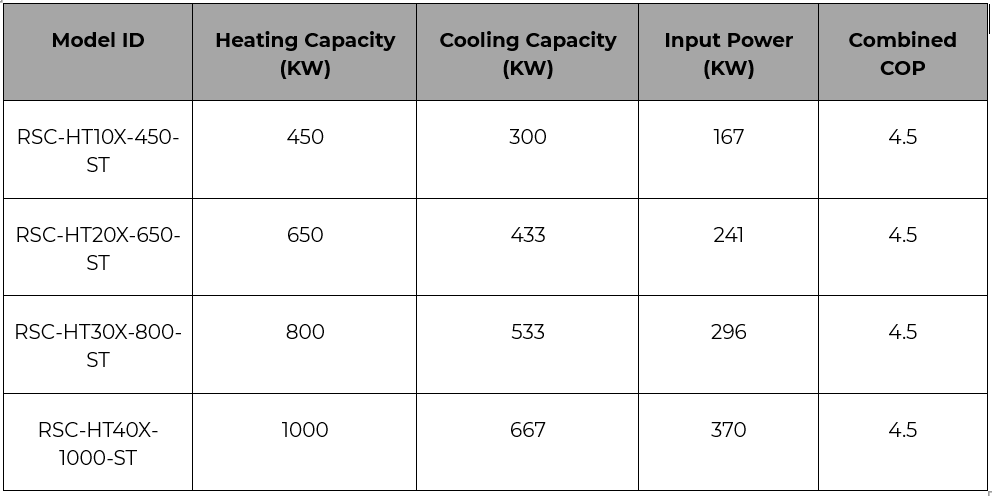
Performance based on 130⁰C fluid outlet and 60⁰C source temperature.
Industry-Specific Impact and Transformation
The integration of steam heat pumps does not follow a one-size-fits-all approach. Different manufacturing sectors have unique thermal profiles and waste heat availability, requiring specialized integration strategies to achieve maximum fuel reduction. Rockshell’s experience across a diverse range of industries from food and beverage to automotive manufacturing has enabled them to develop sector-specific blueprints for thermal electrification.
Food and Beverage Processing
In the food and beverage industry, steam is essential for sterilization, pasteurization, and cooking. These plants also produce vast amounts of hot wastewater from cleaning-in-place (CIP) systems and rejected heat from refrigeration units. By using a Rockshell steam heat pump, a facility can capture the heat from its wastewater and refrigeration loops to generate the very steam needed for pasteurization.
A major global FMCG company implemented a 1 MW Rockshell heat pump for distillation and evaporation, resulting in a 60% reduction in OPEX and fuel savings of approximately 500,000 kg of fuel oil per year. This integration allowed the company to move away from a multi-stage process involving conventional evaporators and membrane technology, simplifying their operations while achieving a return on investment in just 18 months.
Chemical and Pharmaceutical Manufacturing
The chemical industry often requires precise temperature control for reactors and distillation columns. Steam heat pumps provide a stable and controllable source of heat that can be fine-tuned to the exact needs of the process. Furthermore, the ability of Rockshell’s chemical-grade systems to handle corrosive process fluids allows for direct heat recovery from the chemicals themselves, a significant advantage over traditional boiler-based systems that must use intermediate heat exchangers.
In paint manufacturing, for instance, heat is required for drying and emulsion processes. A Rockshell case study for Asia’s largest paint manufacturer demonstrated the impact of replacing diesel-based boilers with a high-temperature water-to-water heat pump. The facility saw a 45% reduction in annual OPEX, saved 204,000 kg of diesel per year, and reduced CO2 emissions by 53 tonnes annually, with a payback period of only 11 months.
Textile and Automotive Sectors
The textile industry is one of the most energy-intensive sectors, requiring large volumes of steam for dyeing and finishing. Most textile mills rely on coal or wood-fired boilers, which are not only inefficient but also major sources of local environmental pollution. Transitioning to Rockshell steam heat pumps allows these mills to recover heat from their hot effluent streams and regenerate steam for their dyeing machines. This electrification eliminates the need for solid fuel storage and ash handling, creating a cleaner and more efficient production environment.
In the automotive sector, steam and high-temperature water are used for parts cleaning, painting, and drying. An automotive manufacturing facility that integrates Rockshell heat pumps into its cooling water loop can achieve a 35% to 40% reduction in total energy consumption. This not only lowers the unit cost of every vehicle manufactured but also helps the company meet the strict carbon neutrality targets set by global automotive headers and regulatory bodies.
Economic Analysis: The Business Case for Electrification
While the environmental benefits of reducing fuel consumption are clear, the adoption of steam heat pumps is primarily a strategic business decision driven by total cost of ownership and return on investment. In the current economic climate, where fossil fuel prices are subject to geopolitical instability and carbon taxes are increasingly prevalent, the financial case for electrified thermal systems is more compelling than ever.
Operational Expenditure (OPEX) Reduction
The primary driver for the high ROI of a steam heat pump is the massive reduction in OPEX. Because the system can achieve COPs of 3.0 to 10.0, the cost of the electricity required to run the compressor is often significantly lower than the cost of the fuel required to produce the same amount of heat in a boiler. In Indian industrial settings, where coal and natural gas prices can be volatile, the efficiency of a Rockshell heat pump can slash process heating costs by 50% to 70%.
Furthermore, heat pumps typically require less frequent and less complex maintenance than boilers. There are no burners to tune, no fuel delivery systems to manage, and no chimney systems to maintain. The reduction in maintenance-related downtime and the lower cost of spare parts contribute to a more stable bottom line. Rockshell’s robust industrial designs are engineered for longevity, often providing a lower TCO over a 10-to-20-year period compared to any fossil fuel-based alternative.
Capital Investment and Payback Periods
The initial capital investment for an industrial heat pump is generally higher than that of a standard gas boiler. However, this upfront cost is rapidly offset by the energy savings. Typical payback periods for Rockshell systems range from 11 months to 3 years, depending on the fuel being displaced and the utilization rate of the system.
In many regions, government incentives for energy efficiency and decarbonization further enhance the economic feasibility. In India, for example, the Perform, Achieve, and Trade (PAT) scheme and various state-level subsidies for MSMEs provide financial support for industries that invest in sustainable technologies. When combined with the potential for earning carbon credits, the financial argument for a Rockshell steam heat pump becomes undeniable for any forward-looking industrial enterprise.
Comparative Economic Metrics for 500 kW System
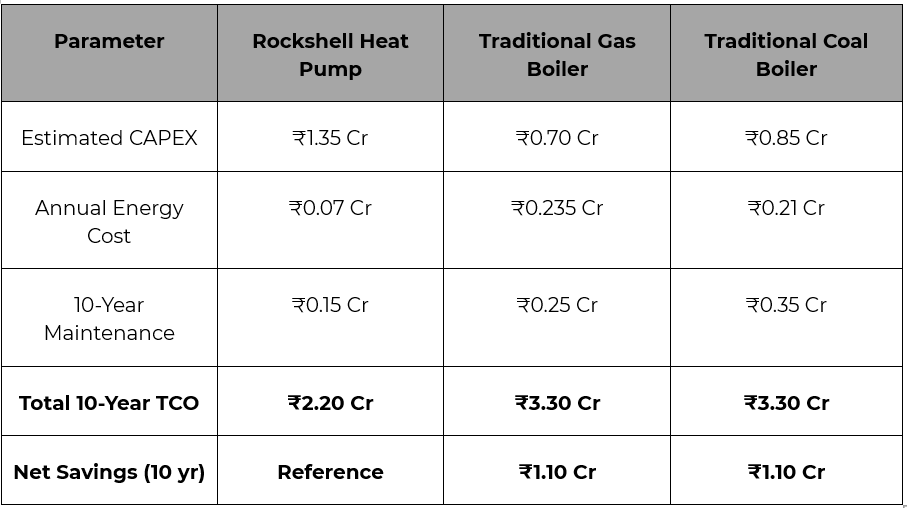
Estimated based on standard 24/7 industrial operating hours and average Indian utility tariffs.
Operational Synergy: Integrating Heat Pumps into Existing Infrastructure
The transition to a fuel-free steam system does not necessarily mean the immediate decommissioning of existing boilers. In many cases, the most effective strategy for reducing fuel consumption is a phased integration where the steam heat pump handles the base load of the plant.
The Lead-Lag Configuration
In a hybrid system, the Rockshell steam heat pump is designated as the “lead” unit, operating continuously to provide the baseline steam demand with high efficiency. The existing fossil fuel boiler is kept in “lag” or standby mode, only firing up to handle peak loads or to provide backup during scheduled maintenance. This configuration ensures that the plant maximizes its fuel savings for the majority of its operating hours while maintaining the high-temperature flexibility of the boiler for extreme conditions.
This approach also minimizes the risk associated with a full technology transition. As the plant operators become more familiar with the heat pump system and as additional waste heat sources are identified, the boiler’s role can be progressively reduced until it is used only as an emergency utility. Rockshell’s design support team works closely with clients during this “optioneering” phase to ensure that the integration is seamless and that all safety protocols are maintained.
Strategic Condensate Management
The efficiency of a steam system is highly dependent on how the plant handles condensate. When steam releases its latent heat to a process, it turns back into hot water. In many older plants, this condensate is allowed to flash to atmospheric pressure, losing significant energy, or it is cooled before being returned to the boiler. A Rockshell heat pump can be used to capture the energy from this high-temperature condensate and use it to generate new steam.
By maintaining the condensate at higher pressures and using a heat pump to “boost” its energy level, the plant avoids the losses associated with traditional feedwater tanks. This effectively closes the steam loop, ensuring that every BTU of energy is utilized to its fullest extent. Rockshell’s expertise in pressurized condensate recovery is a key component of their comprehensive steam system efficiency audits.
Environmental Stewardship and Decarbonization
Beyond the financial and operational benefits, the move toward steam heat pumps is a cornerstone of the global manufacturing sector’s decarbonization strategy. As international supply chains increasingly demand low-carbon or net-zero products, manufacturers who continue to rely solely on fossil fuel boilers face being excluded from premium markets.
Direct and Indirect Emission Reductions
Rockshell heat pumps offer a path to zero direct emissions. Because the units are powered by electricity, they do not produce flue gases, NOx, SOx, or particulate matter on-site. This is particularly important for plants located in urban or ecologically sensitive areas where air quality regulations are strict. When the electricity used to power the heat, pump is sourced from renewable energy such as on-site solar or wind the entire steam generation process becomes carbon-neutral.
The scale of the reduction can be massive. A single 1 MW Rockshell heat pump implementation for an FMCG company resulted in the reduction of 750 tonnes of CO2 per year. For a large industrial conglomerate with multiple facilities, the widespread adoption of heat pump technology can lead to annual carbon reductions in the hundreds of thousands of tonnes, significantly accelerating their progress toward corporate sustainability goals.
Future-Proofing Against Regulatory Changes
The global regulatory environment is shifting rapidly toward penalizing carbon-intensive production. Carbon taxes, border adjustment mechanisms (like the EU’s CBAM), and energy efficiency mandates are becoming the new normal. Manufacturing plants that invest in Rockshell steam heat pumps today are effectively future-proofing their operations against these inevitable regulatory costs.
Furthermore, the electrification of heat allows a facility to participate in demand response programs and take advantage of dynamic electricity pricing. As power grids become more flexible and incorporate more renewable energy, the ability of a heat pump to adjust its load (via variable speed drives and thermal storage) becomes a valuable asset for grid stability, potentially opening up new revenue streams for the manufacturer.
Why Rockshell: Excellence in Indian Manufacturing
Rockshell Corp is not just a manufacturer; it is an engineering partner dedicated to solving the most complex thermal challenges of the industrial world. Headquartered in Mumbai, India, with a state-of-the-art factory in Navi Mumbai, Rockshell has built a reputation for delivering high-performance, robust, and customized heat pump solutions that compete on the global stage.
A Legacy of Innovation and Execution
With over 100 years of combined experience among its team members and a track record of more than 1000 completed projects, Rockshell brings a level of expertise that is rare in the industrial heat pump sector. The company’s vision is “To lead the global transition toward green industrial heating,” and they achieve this by ensuring that every machine is “Built for Industry. Trusted For Execution.”.
Rockshell’s commitment to Research and Development has allowed them to push the boundaries of what heat pumps can achieve. Their ability to deliver steam up to 200⁰C and pressures up to 14 bar is a testament to their engineering prowess. They are pioneers in the use of MVR technology for effluent recovery and ZLD systems, helping industries achieve both their energy and environmental targets simultaneously.
Comprehensive Support and Customization
Rockshell understands that every manufacturing plant is different. This is why they offer a full suite of services, from design support and system optioneering to supply, commissioning, and after-sales support. Their team works closely with plant engineers to conduct site audits, measure energy flows, and calculate precise heat loads to ensure that every heat pump is perfectly sized for the application.
The customization capabilities of Rockshell are particularly valuable for specialized sectors. Whether it is a chemical-grade heat pump designed to handle corrosive fluids or a multi-source system integrated with a complex cooling loop, Rockshell has the capability to design and manufacture a solution that fits the specific constraints of the site. This commitment to holistic support ensures that the investment continues to deliver peak performance and maximum fuel savings for years to come.
Technical Review: Boiler Maintenance vs. Heat Pump Maintenance
A critical factor in reducing the total cost of ownership for a steam system is the shift in maintenance requirements when moving from boilers to heat pumps. Traditional boilers, particularly those using solid fuels like coal or biomass, involve significant mechanical wear and chemical management.
Boiler Maintenance Challenges
Boilers operate with extreme temperature differentials and combustion-related fouling. Fire-side maintenance involves cleaning soot and ash from tube surfaces to maintain heat transfer efficiency, while water-side maintenance is focused on preventing scale buildup and corrosion. Failure to manage these factors leads to a rapid decline in efficiency, forcing the boiler to consume more fuel to produce the same amount of steam. Additionally, the burners and fuel delivery systems require frequent tuning to maintain the optimal air-to-fuel ratio, a process that is highly sensitive to variations in fuel quality.
Heat Pump Maintenance Advantages
In contrast, a Rockshell steam heat pump is a closed-loop system with fewer moving parts exposed to the elements. The primary maintenance activities involve monitoring refrigerant levels, checking electrical connections, and inspecting the oil in the compressor. Because the system does not involve combustion, there are no soot blowers to maintain and no flue gas monitors to calibrate. The heat exchangers are designed for long intervals between cleanings, especially when integrated with Rockshell’s advanced water treatment or chemical-grade filtration systems. This translates to higher system uptime and lower labour costs for the plant’s maintenance team.
Conclusion: The Path Forward for Modern Manufacturing
The evidence is clear: the integration of steam heat pumps is the most effective and sustainable method for reducing boiler fuel consumption in the modern manufacturing plant. By leveraging the thermodynamic power of the vapor compression cycle and the innovative technology developed by Rockshell, industries can achieve a radical transformation of their energy profiles. The transition from fossil fuel combustion to electrified thermal energy recovery is no longer a futuristic concept it is a proven, high-ROI strategy that is already being deployed by global leaders in the food, chemical, pharmaceutical, and automotive sectors.
Rockshell Corp stands as a beacon of excellence in this transition, providing the high-temperature capabilities and robust industrial designs necessary to meet the rigorous demands of global manufacturing. From producing 200⁰C steam to achieving COPs of over 10, Rockshell’s solutions represent the pinnacle of thermal engineering. For manufacturing plant owners and engineers, the question is no longer whether to move away from traditional boiler systems, but how quickly they can integrate Rockshell’s technology to start saving on fuel, reducing their carbon footprint, and securing their competitive edge in a green global economy.
By choosing Rockshell, manufacturers are not just purchasing a machine; they are investing in a cleaner, more efficient, and more profitable tomorrow. The journey toward a fuel-free, high-efficiency steam system begins with a single step: understanding the untapped thermal potential of your own facility.
Strategic Call to Action for Manufacturers
The time to optimize your plant’s steam system is now. Every day that your facility continues to rely solely on fossil fuel boilers is a day of wasted energy and unnecessary expenditure. Rockshell Corp invites industry leaders to collaborate on a thermal energy assessment to identify the fuel reduction potential within their plants.
Whether your goal is to achieve net-zero emissions, slash your operational costs, or enhance the reliability of your steam production, Rockshell has the expertise and the technology to make it a reality. Contact our team today to learn more about our high-pressure steam heat pumps, MVR systems, and customized thermal solutions.