👤 Rockshell Insights
04/08/2026
Food and dairy plants that produce milk powder, liquid milk, cheese, yogurt, and butter all depend on one non-negotiable input: a steady, reliable supply of hot water and process heat. For decades, that heat has come from gas or oil boilers, a combustion-based approach that carries high fuel costs, volatile pricing, and a heavy Scope 1 carbon footprint. As energy costs climb and decarbonization mandates tighten, more manufacturers are adopting Heat Pumps in Food & Dairy Industries to electrify their thermal operations without compromising output or hygiene compliance.
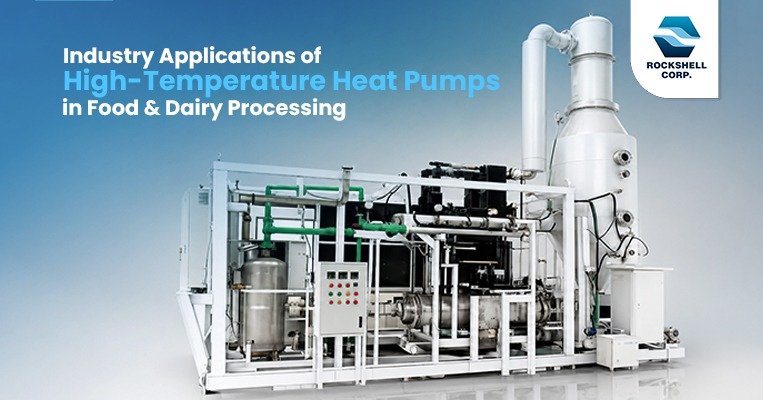
As a leading heat pump manufacturer in India, Rockshell Corp is at the forefront of this shift, supplying high-temperature heat pumps and waste heat recovery systems to food and dairy processors worldwide. These systems work by pulling heat from sources like water, air, or waste heat streams and lifting it to the temperatures processing lines actually need powering pasteurization, clean-in-place (CIP) systems, evaporation, spray drying, and general facility heating, all on electricity instead of fuel.
What Is an Industrial High-Temperature Heat Pump?
An industrial high-temperature heat pump generates heat by moving thermal energy from a lower-temperature source ambient air, water, or waste heat rather than burning fuel. A refrigerant absorbs this heat, and a compressor raises its pressure to push the temperature up sharply, transferring it into the plant’s water, air, or steam loop. While residential heat pumps top out around 50°C, industrial high-temperature heat pumps (HTHPs) commercially deliver 100°C to 160°C, with pilot systems now reaching 180–200°C, covering essentially the entire heat load required for pasteurization, cleaning, drying, and process steam generation. Rockshell Corp engineers its high-temperature heat pump range to reach up to 200°C, giving food and dairy plants a fully electrified option even for their most demanding thermal processes.
What makes these systems so compelling is the output ratio unlike fossil-fuel boilers that convert fuel directly to heat, high-temperature heat pumps typically achieve a coefficient of performance (COP) between 2 and 4, meaning they deliver two to four units of usable heat for every unit of electricity consumed a performance level no combustion boiler can approach. Because they run on electricity rather than fuel, they also produce zero on-site emissions, making them a cleaner and materially lower-cost way to meet industrial process heating demand. Rockshell Corp’s product line reflects this range well, with multi-source hot water heat pumps reaching a combined COP of up to 7.
Why Industrial High-Temperature Heat Pumps Are Ideal for Food & Dairy Plants
Food and dairy processing are, in many ways, a best-case scenario for this technology.
- Right temperature ranges: The vast majority of thermal demand in this sector pasteurization, cleaning, and drying falls in the 60–120°C range, well short of the extreme temperatures required in heavy industries like steel or cement. That range sits comfortably within what a modern high-temperature heat pump delivers as standard.
- Waste heat recovery: Dairy and food plants generate substantial volumes of low-grade waste heat. Refrigeration systems, wastewater, and exhaust air all carry usable thermal energy that is currently being discarded through cooling towers or drains. A heat pump doesn’t require a new heat source it simply recovers energy the plant is already producing, turning thermal waste into a high-value asset.
- Precise temperature control: Food safety regulations demand consistent, tightly controlled temperatures. Heat pumps modulate more precisely than combustion boilers, a quiet but meaningful operational advantage for plants operating under strict quality assurance protocols.Rockshell Corp serves dairy along with other industries like FMCG, beverages, pharma, and beer & spirits, showing how well this technology fits food-grade thermal processing.
Key Applications of Industrial High-Temperature Heat Pumps in Food & Dairy Plants
- Pasteurization and Thermal Processing: Pasteurization is one of the most energy-intensive steps in dairy production and one of the best-matched to heat pump technology. Most pasteurization stages run between 72°C and 95°C, comfortably within reach of a modern industrial high-temperature heat pump. Plants that pair a heat pump with heat recovery from the pasteurizer’s own cooling side can cut the net energy required for this step dramatically.
- Clean-in-Place (CIP) Systems: CIP loops require hot water, typically 60–85°C, on a near-continuous basis to sanitize tanks, pipes, and processing lines. Because CIP demand is predictable and recurring, it’s an ideal load for a heat pump to serve particularly when paired with a thermal storage tank that buffers demand spikes.
- Evaporation and Milk Concentration: Producing milk powder, whey concentrate, or condensed milk requires evaporating large volumes of water an enormously energy-hungry step. High-temperature heat pumps are increasingly deployed to supply heat for multi-effect evaporators, and in some plant designs, mechanical vapor recompression is paired with heat pump technology to recycle the evaporator’s own vapor as a heat source.
- Spray Drying: Milk powder and infant formula production rely on spray dryers that need hot air, often above 100°C. While the highest-temperature drying stages may still require a supplementary heat source, heat pumps are commonly used to pre-heat inlet air or handle lower-temperature drying zones, meaningfully reducing fuel consumption. Rockshell Corp’s purpose-built air-to-air heat pumps for food dehydration and spray drying deliver hot air up to 130°C, covering a large share of drying and dehydration needs across dairy and food processing.
- Space and Facility Heating: Beyond process heat, dairy and food plants also require space heating for offices, changing rooms, and cold-adjacent work areas. Waste heat recovered from refrigeration compressors can be upgraded by a heat pump and redirected for this purpose a simple, often-overlooked win.
- Hot Water for Bottling and Packaging Lines: Bottle and container sanitizing lines, along with certain packaging processes, need a steady hot water supply. This is another stable, predictable load that heat pumps serve efficiently.
Key Benefits of Industrial High-Temperature Heat Pumps for Dairy Industries
- Lower energy costs per unit of heat: With a combined COP of up to 7 for hot water systems, and a typical COP of 2–4 for high-temperature process heat, far less energy input is required compared with direct-fired boilers.
- Reduced carbon footprint: Electrifying process heat particularly when paired with renewable electricity significantly cuts a plant’s Scope 1 emissions.
- Waste heat recovery adds a second win: Plants aren’t just generating heat efficiently; they’re reclaiming energy that was previously vented or dumped into cooling towers.
- Better temperature control: Heat pumps modulate more precisely than combustion systems, supporting product consistency and quality assurance.
- Regulatory and compliance advantages: As carbon pricing and emissions reporting requirements expand across food manufacturing, electrified heat reduces long-term compliance risk.
- Quieter, lower-maintenance operation: compared with combustion boilers, since there’s no flame, flue gas handling, or fuel storage involved.
- Seamless integration and long service life: High-temperature heat pumps are designed to integrate with existing boiler, steam, and hot water networks rather than requiring a full system overhaul, and typically deliver 15–20 years of reliable service life.
- Proven results in real plants: In one documented case, a Rockshell Corp heat pump system cut opex by 45% and paid back its cost in 11 months for a manufacturer switching away from diesel-based heating the kind of returns food and dairy plants can expect from comparable projects.
Common Challenges of Industrial High-Temperature Heat Pumps
No technology is a perfect fit for every situation, and the trade-offs are worth stating plainly.
- Upfront capital cost: Industrial high-temperature heat pumps cost more per unit of heating capacity than a comparable gas boiler. Payback depends heavily on local electricity and gas prices, so a proper energy audit and financial model matter more here than for most equipment purchases.
- Temperature ceiling limitations: Standard industrial heat pumps top out in the 130–135°C range for pressurized hot water. Processes that need higher-grade heat require a dedicated high-temperature heat pump Rockshell Corp’s high-temperature heat pump range.
- Availability of a low-grade heat source: Heat pumps need somewhere to draw heat from. Plants without accessible waste heat streams wastewater, refrigeration condensers, or exhaust air will see smaller efficiency gains and should evaluate ambient air or ground-source options instead.
- Retrofit complexity: Integrating a heat pump into an existing steam or hot water network sometimes requires redesigning distribution loops, adding buffer tanks, or adjusting set points across multiple systems. This is a design and engineering exercise, not a plug-and-play swap.
- Refrigerant choice: Natural and next-generation refrigerants CO2, ammonia, propane, and low-GWP HFOs like R1233zde and R1234ze are increasingly favoured for high-temperature applications because of their low global warming potential, but each comes with its own safety, pressure, and material compatibility considerations that need proper engineering review.
Why Choose Rockshell Corp for Industrial High-Temperature Heat Pumps
Picking the right manufacturer matters just as much as picking the right technology especially for a food or dairy plant where uptime and hygiene compliance are non-negotiable. Here’s what sets Rockshell Corp apart:
- A full range of heat pump formats: Rockshell Corp builds steam-producing high-temperature heat pumps (up to 200°C / 14 bar, with COP reaching up to 10+ for steam loops), multi-source hot water heat pumps (up to 135°C, combined COP up to 7), and air-to-air heat pumps for drying and dehydration (up to 130°C) covering nearly every thermal need a food or dairy plant might have, under one roof.
- Deep dairy and FMCG experience: Dairy is one of Rockshell Corp’s cores served industries, alongside FMCG, beverages, pharma, and beer & spirits, meaning the engineering team already understands food-grade hygiene and process requirements.
- Documented, verifiable results: Rockshell Corp’s case studies show real outcomes, including a 0.45 MW, 90°C heat pump project for a major paint manufacturer that delivered 45% opex savings, 53 tonnes of annual CO2 reduction, and an 11-month payback; and a 1 MW high-temperature heat pump for a global FMCG company, used for distillation and evaporation, that achieved 60% opex savings and 750 tonnes of annual CO2 reduction.
- Low-GWP refrigerants and flexible heat sources: Systems run on refrigerants like R1233zde and R1234ze, and can draw heat from ammonia/chiller desuperheaters, cooling tower waste heat, compressor waste heat, or chilled water so plants aren’t limited by whatever waste heat they happen to have on-site.
- Customization and local manufacturing: Units are built to order, with options across heat exchanger type, materials of construction (including SS316L for wetted parts), and controls (Siemens/Delta with Modbus connectivity), and are manufactured in India under the Make in India initiative.
Conclusion:
Food and dairy processing run on heat, and for decades that heat has meant burning fuel. Heat pumps in food & dairy processing change that equation by recovering energy already inside the plant and delivering it at the exact temperatures pasteurizers, CIP systems, dryers, and evaporators need. The technology isn’t the right fit for every single process but for the majority of thermal loads under 150°C, it stands out as one of the most reliable ways to cut energy costs and emissions at the same time.
Ready to Decarbonize Your Food or Dairy Plant?
Evaluate your facility’s heat recovery potential with a detailed plant heat load calculation and audit.
- Email: support@rockshellcorp.com
- Phone: +91 8097588428 / +91 9702812944
- Learn More: Explore Rockshell High Temperature Heat Pumps